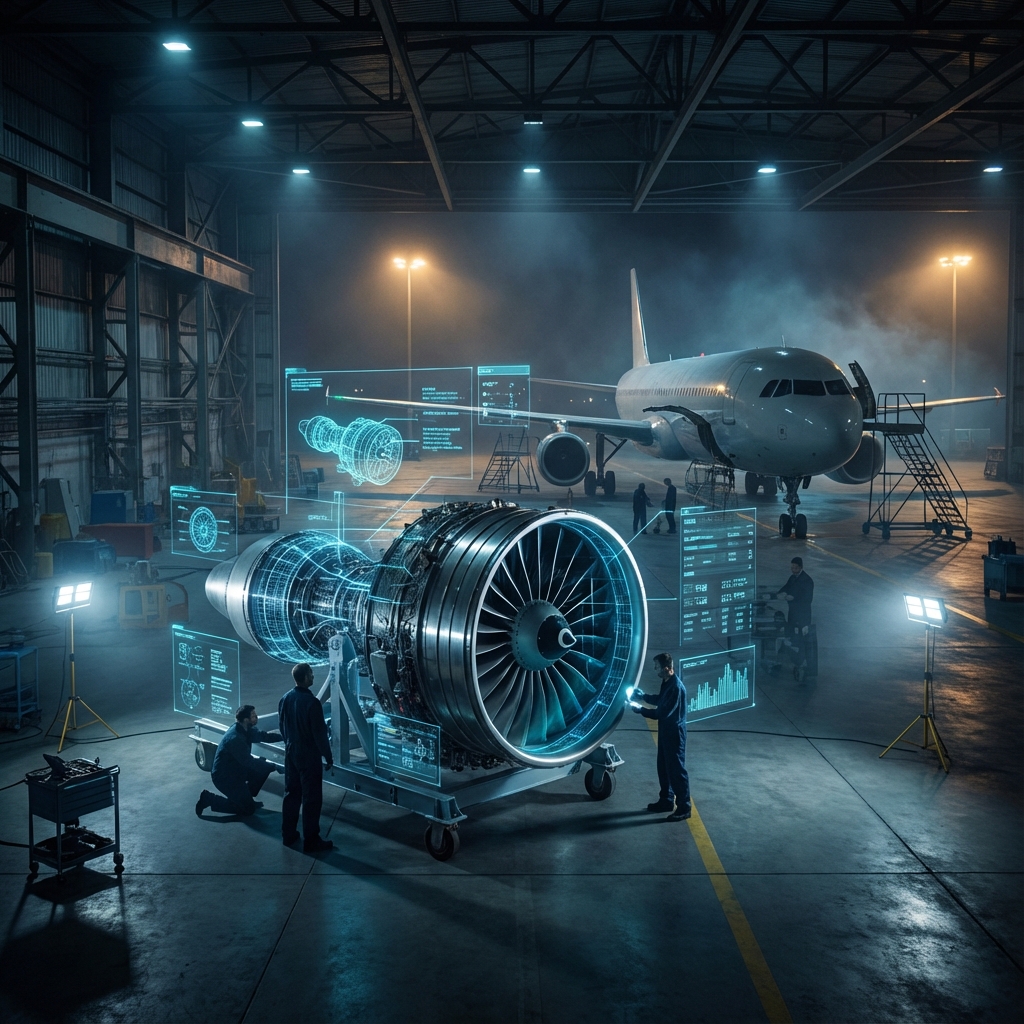
Case Study 01
Connected Operations & Fleet Intelligence
A large logistics operator managed a mixed fleet across air and ground networks. Unexpected equipment failures and reactive maintenance were impacting reliability. We engineered a real-time intelligence platform to predict disruptions before they occurred.
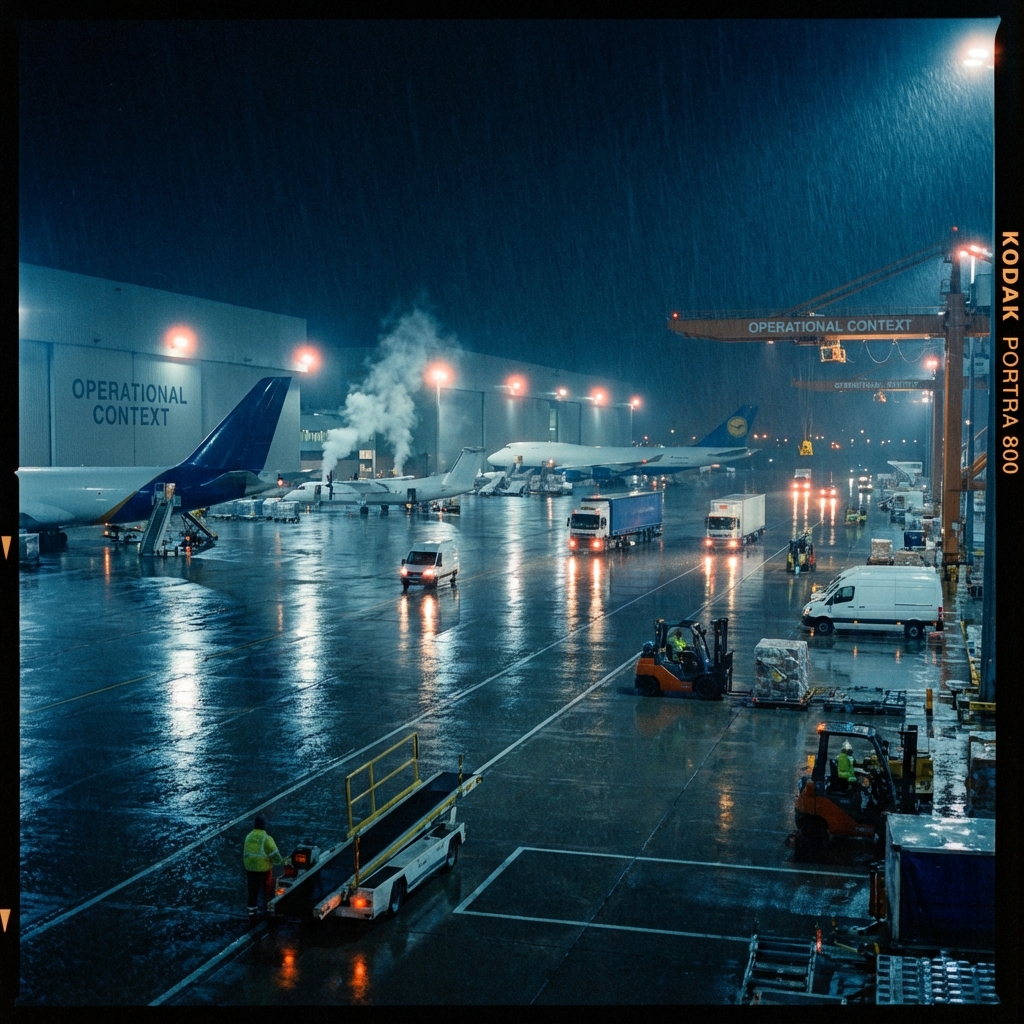
The Context
A Massive Fleet Under Pressure
The client operated a massive fleet of cargo aircraft and ground vehicles. Maintaining service levels meant ensuring every asset was ready to move. However, operational data was fragmented across IoT sensors, maintenance logs, and route systems.
Decisions were reactive. A single component failure could ground an aircraft, triggering a cascade of shipment delays, rerouting costs, and missed SLAs.

The Friction Point
Reactive Maintenance Was the Bottleneck
Telemetry data was siloed. Failures were detected too late. Operational downtime was not just a cost - it was a reliability crisis.
Reactive maintenance leading to costly unplanned downtime across the fleet.
Siloed sensor data preventing holistic fleet health views and early warning signals.
Disruptions cascading into missed customer SLAs and rerouting costs.
Our Approach
Engineering Predictive Operations
Real-Time Data Ingestion
We engineered a platform to ingest live sensor data, maintenance logs, and environmental telemetry into a unified data lake, creating a single source of truth for fleet health across air and ground assets.
Predictive Failure Modeling
Machine learning models analyzed component degradation patterns to predict failures days in advance, allowing for preemptive intervention and intelligent spare parts allocation.
Automated Workflow Sync
Maintenance orders were triggered automatically, synchronizing supply chain parts and mechanic availability with vehicle downtime windows to minimize operational disruption.
Measurable Results
Impact on Fleet Operations
Unplanned maintenance events
For component failures
Annual maintenance spend
Post-deployment
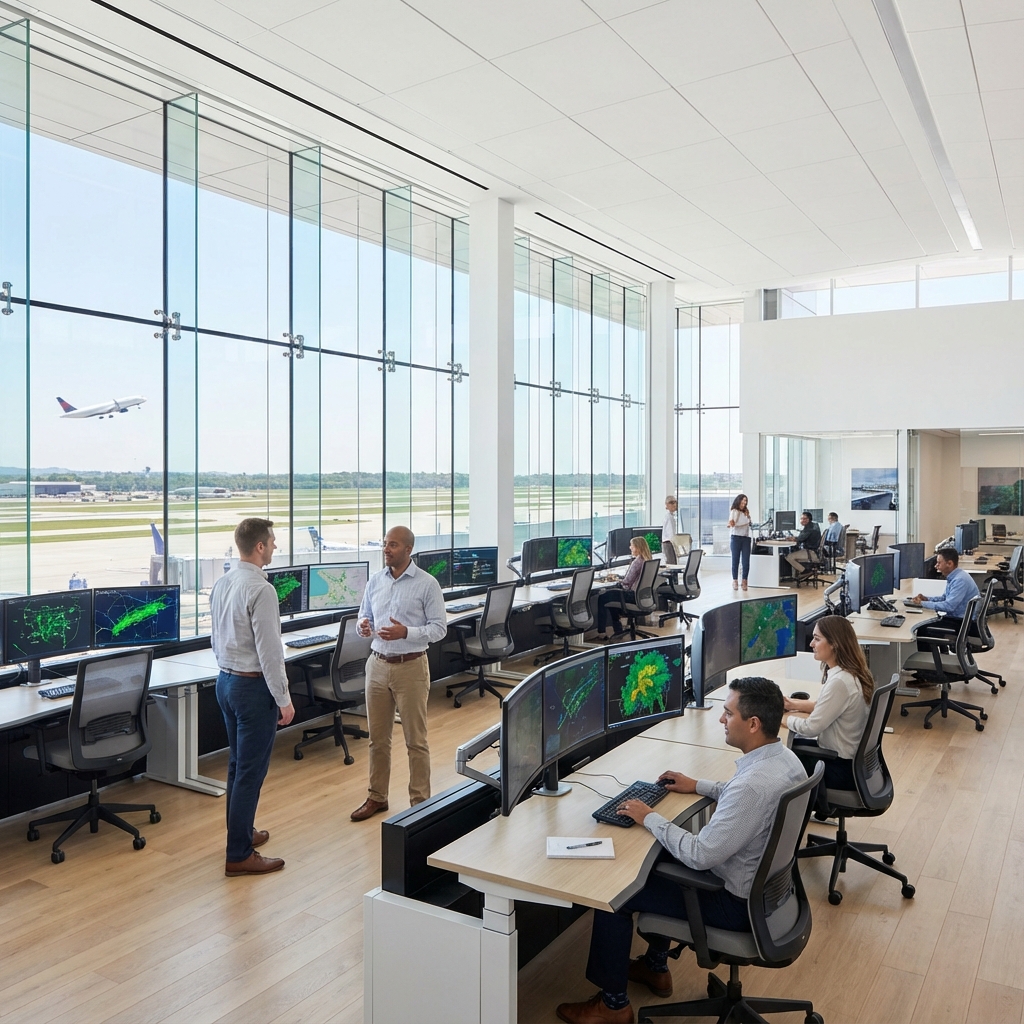
Case Study 02
Crew Recovery & Operational Continuity
Solving the puzzle of crew alignment during weather disruptions with AI-driven optimization for a major global airline.

The Context
Disruptions That Cascade
For a major global airline, weather disruptions and airport congestion frequently caused cascading delays, leaving crews "timed out" or out of position. Manual recovery planning took hours, leading to flight cancellations, regulatory risks, and significant financial loss.
The Friction
Manual scheduling unable to keep up with disruptions.
Fragmented systems for crew tracking and weather data.
Regulatory compliance risks during extended delays.
High cost of crew displacement and overtime.
The Solution
AI Optimization Engine
RSA Tech built an optimization engine that continuously evaluates crew availability, regulatory constraints, and aircraft positioning to generate recovery plans in minutes.
Smart Scheduling
Automated recovery plans that reassign crews across the network in minutes, not hours.
Mobile Integration
Real-time crew app updates providing instant notifications and schedule changes on the go.
Regulatory Check
Instant compliance validation against FAA duty-time rules and union agreements.
Cost Optimization
Minimizing overtime, hotel costs, and deadheading through intelligent resource allocation.
Measurable Operational Impact
Full Spectrum
Transportation Capabilities
Questions
Transportation AI FAQs
AI transforms logistics through real-time route optimization, demand forecasting, and predictive fleet maintenance. Machine learning models analyze traffic patterns, weather data, and historical delivery performance to reduce transit times by 20-30%. Combined with IoT sensor data, AI enables condition-based maintenance that prevents costly breakdowns and ensures on-time delivery rates above 98%.
AI is the backbone of autonomous vehicle systems, powering perception (computer vision and LiDAR processing), decision-making (path planning and obstacle avoidance), and fleet coordination. We help transportation companies build the data pipelines, simulation environments, and edge computing infrastructure needed to develop, test, and deploy autonomous systems safely at scale.
AI optimizes airline operations through intelligent crew scheduling, disruption recovery, and predictive maintenance for aircraft. During irregular operations, AI-powered recovery engines can reassign crews and reroute aircraft in minutes instead of hours, reducing cancellations by 25% and saving millions in displacement costs while maintaining full regulatory compliance.
Predictive maintenance uses IoT sensors and machine learning to monitor equipment health in real time, detecting degradation patterns before failures occur. By analyzing vibration, temperature, pressure, and performance data, AI models predict component failures days or weeks in advance. This enables proactive intervention, reducing unplanned downtime by 40% and extending asset lifespan by 15-20%.
Let's Optimize Your Operations
Every transportation and logistics organization has unique challenges. We have the expertise and case studies to solve them.