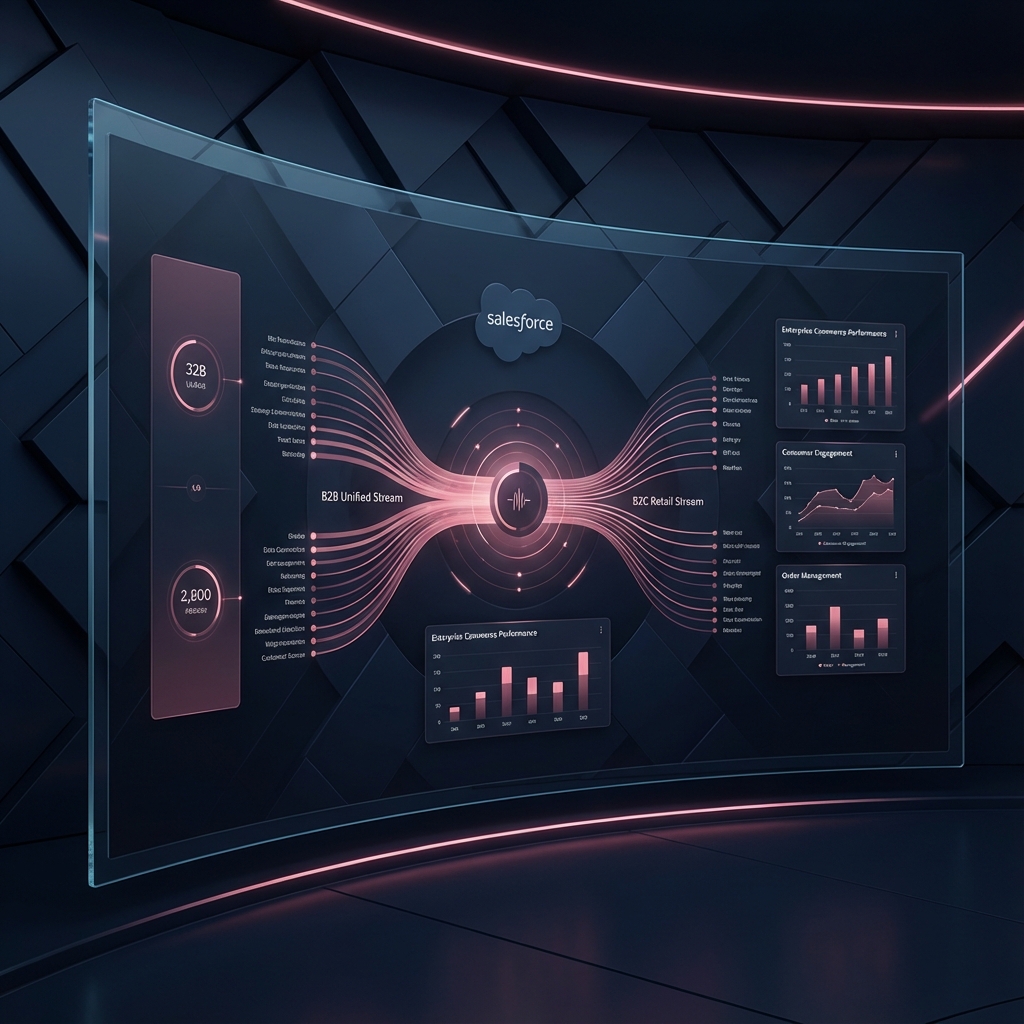
Case Study 01
Unified Salesforce Commerce for B2B and B2C Retail
A major retail enterprise operating both D2C and wholesale channels struggled with fragmented experiences across Salesforce Sales Cloud, Service Cloud, and legacy commerce platforms. We implemented an end-to-end Salesforce ecosystem to unify operations and accelerate growth.

The Context
B2C and B2B Storefronts Completely Disconnected
The client's digital storefronts for B2C and account-based purchasing for B2B were completely disconnected. Customer data resided in isolated silos, preventing a unified view of the customer journey.
Sales teams lacked visibility into online browsing behavior, making cross-selling difficult. Meanwhile, service agents operated without context, leading to reactive support and slow resolution times.

The Friction Point
Manual Processes Blocking Growth
Manual sales processes for B2B buyers and static experiences for B2C shoppers wasted opportunities. With limited intelligence across service, marketing, and commerce, the brand could not scale efficiently.
Lack of a single, unified view of customer and account data across all channels.
Manual, high-friction sales processes for B2B wholesale partners slowing deal velocity.
Static B2C experiences with limited AI-driven personalization failing to convert browsers.
Our Approach
Unified Salesforce Ecosystem
Commerce Cloud & Experience Cloud
We launched unified digital storefronts for B2C and a dedicated partner portal for B2B, streamlining ordering and account management across every channel.
Sales & Service Cloud Integration
Sales teams gained full visibility into digital carts and browsing behavior for cross-selling, while service agents utilized AI-powered case routing for faster, contextual support.
Embedded AI Intelligence
We integrated predictive product recommendations, intelligent lead scoring, and automated workflows directly into the Salesforce fabric - turning data into action at every touchpoint.

Measurable Results
Impact on Business
For B2B wholesale partners
Driven by cross-sell insights
Reduction in case resolution time
Single source of customer truth
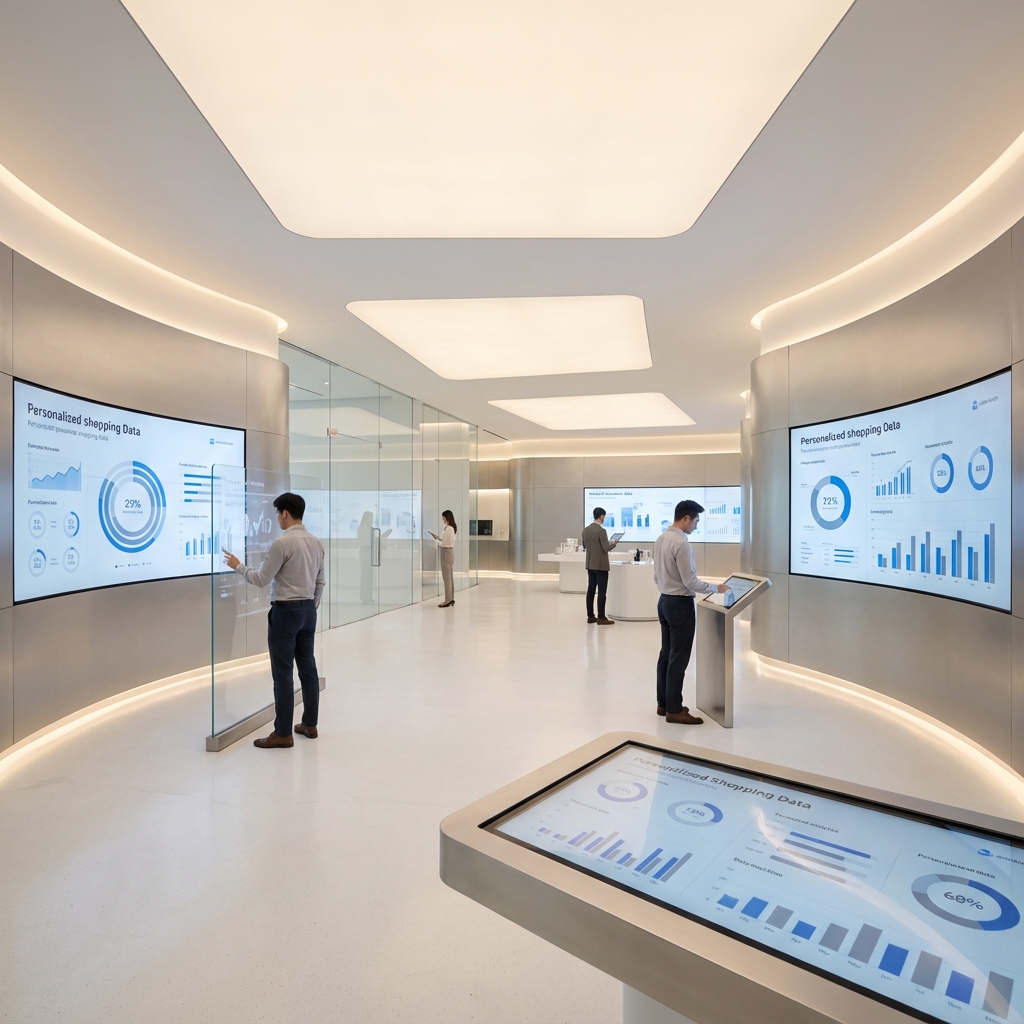
Case Study 02
Unified Commerce & Customer Experience
Elevating the shopper journey with AI. Real-time personalization and intelligent activation across web, mobile, and in-store channels.

The Context
Shoppers Browsed but Disengaged
Shoppers browsed frequently but disengaged before purchasing due to irrelevant recommendations and delayed personalization. Marketing was reactive, analyzing behavior only after sessions ended, missing the critical window to influence engagement.
The Friction
Customer data siloed across legacy e-commerce and CRM systems.
Static product recommendations failing to reflect intent.
Disconnected experiences between digital and physical stores.
Inability to act on behavioral signals in real time.
The Solution
Hyper-Personalization Engine
We created a unified customer data layer that aggregates signals from all touchpoints, enabling AI models to score intent in milliseconds and deploy personalized experiences instantly.
Unified Intelligence
Aggregating web, mobile, and POS signals into a single customer view for real-time decisioning.
Real-Time Intent Scoring
AI models analyzing behavior patterns to predict next best action and surface relevant offers.
Omnichannel Activation
Instantly deploying personalized content and recommendations across all digital and physical channels.
Measurable Revenue Impact
Full Spectrum
Retail Capabilities
Questions
Retail AI FAQs
AI personalization analyzes real-time behavioral signals - browsing patterns, cart activity, purchase history, and contextual data - to deliver hyper-relevant product recommendations and content. Retailers typically see 15-30% conversion lifts by replacing static recommendations with dynamic, intent-based personalization that adapts within milliseconds.
Yes. AI-powered inventory intelligence unifies stock visibility across warehouses, stores, and fulfillment centers in real time. Predictive models forecast demand at the SKU level, automate replenishment, and enable ship-from-store capabilities - reducing stockouts by up to 40% and overstock by 25%.
Visual search allows shoppers to upload images or use their camera to find visually similar products in your catalog. AI models analyze color, shape, pattern, and style to surface relevant matches instantly - increasing product discovery by 35% and reducing search abandonment significantly.
Modern AI demand forecasting models incorporate historical sales data, seasonality, weather patterns, social trends, and macroeconomic signals to predict demand with 85-95% accuracy. This enables smarter purchasing decisions, reduced waste, and optimized markdown strategies that protect margins.
AI transforms physical retail through smart mirrors, personalized digital signage, real-time inventory lookup, clienteling apps for associates, and unified customer profiles that bridge online and offline interactions. Retailers using in-store AI see 20% higher basket sizes and measurably improved customer satisfaction.
Let's Modernize Your Commerce Experience
Every retail brand has unique challenges. We have the expertise and case studies to solve them.